

Twenty years ago on April 29, I sat in my car at a red light at the corner of Manchester Boulevard and Vermont Ave., less than a couple of hours after the infamous trial for the Los Angeles police officers who had been charged in the beating of black motorist Rodney King a year before.
I remember driving from Long Beach to Los Angeles, listening to the verdicts being announced and being played over on the radio station I had tuned into.
I remember feeling a strange tightness gripping my chest, and a slow, simmering anger ripping through my body. I remember feeling deflated, sad and questioning whether the judicial system was really created for equal justice for all.
I had just gotten off work and was headed to see my then girlfriend who lived in an off-cuff house off of Normandie Ave., a street dominated by small-time liquor stores and apartment complexes and wedged between Manchester Blvd. and Century Ave. in South Los Angeles.
As I hit the 110-Habor Freeway on my way to Los Angeles, I listened intently to the pronounced acquittal of the white police officers by a primarily all-white jury in Simi Valley, a mostly white suburban section of Ventura County.
Even though the horrific beating of King was caught on videotape, and was introduced as evidence into the courtroom, most black people, especially in Los Angeles, didn’t think the white police officers stood even a remote chance of being convicted and going to jail as long as the jury makeup looked like the cops they were judging.
What they did was hold on to false hope as I did; believing that there was no way the criminal justice system could be that egregious and racist. As it turned out the worst fears of the black community came into fruition on April 29, 1992.
Once again, the black community had been shushed and told by civic leaders and local politicians to remain calm and let the justice system play itself out. Once again the justice system failed the black community.
The verdicts were rendered on a beautiful, clear day. The police officers celebrated beating the criminal charges that been levied against them. Meanwhile, I felt and discerned an eerie of silence and calm as I made my drive from the Beach to South Los Angeles. I made a pit stop to my girlfriend’s house, before heading to the local supermarket to pick up some groceries.
I made it as far as Manchester and Vermont before the civil unrest erupted.
As I sat at that red light, I leaned over and talked to one of my girlfriend’s relatives about the discrepancies of the justice system towards African Americans, and how the verdict in the police officers’ trial of the Rodney King beating was a setback in many ways for black people.
The trust issue between black people and the police and the justice system was very real then. It still is. The recent tragedy surrounding the slaying of black teenager Trayvon Martin, and subsequent fallout in the wake of a failed criminal justice system which took nearly two months to formally arrest his self-confessed killer, continues to illustrate this divided wedge.

The King beating and the acquittal of those police officers only served to forge a deeper distrust of the black community towards law enforcement and the criminal justice system. I remember feeling despondent and being in a somber mood. I was tense and upset about the verdict as many people were.
Then it happened. All of a sudden, I heard what sounded like gunfire. I looked into my rearview mirror, and I could see a throng of young black men, walking boldly in the street right behind me on Vermont Ave., armed with guns, snatching people out of their vehicles, beating them and firing rounds of bullets in the air.
There wasn’t a news bulletin. There wasn’t a CNN update I could use to clarify the situation. I was right in the middle of the turbulence.
A wave of fear came over me. It was the kind of fear that tells you if you don’t get out of there, you’re going to either wind up with a bullet slug lodged in you or you are going be carjacked and become the victim of a massive beating by a bunch of street hoods and be left to die. I peeled off and drove right through the intersection, red light and all-only to find more trouble lying ahead.
To my right, looters had already overwhelmed and taken over the neighborhood, setting fire to buildings, trashing workplace offices and creating mayhem all over the place. The streets were cluttered with people going in and out of stores with clothing and other merchandise in their hands. The shooting didn’t stop.
To my left, I saw ordinary citizens running to get out of the way of the impending harm and chaos that was to come. And just like that, in the blink of an eye, I saw a clear, sunny day in Los Angeles turn into a dark cloud of chaos, angst, destruction, death and rebellious revelry.
A lot has been made of the media accounts about the beating of white truck driver Reginald Denny, who pulled out of his vehicle at the corner of Florence Ave. and Normandie Ave., and being beaten to a pulp.
They somehow missed all of the black people being unmercifully dragged out of their cars by hoodlums. While the media focused its attention on what was happening on Normandie Ave., there were a lot of black folks on Vermont Ave., scrambling to get out of harm’s way, including myself. I remember trying to drive and weave my way through all of the confusion and madness.
I didn’t see peace anywhere. What I did see that evening were people burning with a lustful zeal to destroy. As I drove through this awful scene to get to safety, I can still see vividly two young black men trying to set fire to one of the local swap meets. I saw guns. There were a lot of guns.

Probably the scariest sight for me to see was all these young people walking and running around with assault weapons, as if they were eagerly anticipating any reason to use them. Fortunately, I made it back to my girlfriend’s house. We, along with her family, watched the burning and destruction of Los Angeles on television.
That wasn’t enough for me. After a couple of hours of watching the city implode, against my better judgment and my own safety, I decided to go out to see what was going on firsthand.
At the time of the riots, I worked as a custodian at USC-Medical Center, and I was a student at Los Angeles Southwest College. There was no reason for me to go back into the middle of all that was happening and risk my life. But I think more than anything else, my journalistic instincts kicked in. I almost felt an obligation to go out there to find out what was going on.
So I took my tape recorder and a notepad and went into the fiery wilderness now called South Los Angeles. As I drove around, I saw people walking around with huge television sets. Billows of darkness engulfed the city as the fires roared with crackling precision. There were trucks backing up to stores with people loading them up with merchandise.
I saw shattered glasses. I saw plenty of black-owned business signs, which African American proprietors put up to dissuade looters from hitting their stores. I saw terror in the eyes of store vendors. I saw people with a lust for wanton destruction. Through all of this, somehow I had the audacity to walk up to looters and those that were causing all of this destruction why they were doing what they were doing.
Perhaps the scariest part in all of this, many of them responded by saying they were doing it because they had seen other people do it. Some blamed the verdicts. Some blamed the whole judicial system. Some just had no clue why they were doing what they were doing. The Los Angeles Riots in 1992 is something I hope never again.
There were a lot of heartache and sadness as a result of the uprising. Twenty years later, South Los Angeles is still reeling from the impact of the riots. A lot of buildings that burned down have not been replaced. The scars left by the many vacant lots and depleted businesses run deep. The memories of that unrest is just as troubling.
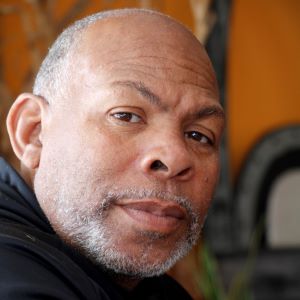
Dennis has covered and written about politics, crime, race, sports, and entertainment. Dennis currently covers the NFL, MLB, NBA, NCAA, and Olympic sports. Dennis is the editor of News4usonline.com and serves as the publisher of the Compton Bulletin newspaper. He earned a journalism degree from Howard University. Email Dennis at dfreeman@news4usonline.com
Discover more from
Subscribe to get the latest posts sent to your email.